


Client Retention Rate: How to Work Out Yours, and What One Lost Regular Costs
Your client retention rate is the regulars still booking at the end of a year, divided by the regulars you had at the start. If 45 of 60 are still with you, it is 75%.
It is the quietest number in a service business. A client who stops coming does not send a cancellation. She simply is not in the diary, and a full week hides the gap.
Here is how to work it out from records you already have, what one lost regular is worth, and where to look when the figure slips.

Income by client is where a missing regular shows up first. Example data.
The short version
Retention rate = regulars still booking ÷ regulars at the start × 100.
A regular is worth her price times her visits in a year.
Keeping a client costs less effort than finding a new one.
Check it twice a year. Once is a snapshot, twice is a trend.
How to work it out
Decide what a regular is. For example, anyone who booked at least three times in a year.
List your regulars from twelve months ago. Your income records by client will give you the names.
Mark each one who has booked in the last three months.
Divide the marked names by the whole list, and multiply by 100.
Line | Number |
|---|---|
Regulars twelve months ago | 60 |
Still booking today | 45 |
No longer booking | 15 |
Retention rate | 75% |
What a regular is worth
Multiply what she pays per visit by how often she comes in a year.
Line | Amount |
|---|---|
Price per visit | $95 |
Visits a year | 9 |
One regular, for one year | $855 |
The fifteen who left | $12,825 |
Fifteen clients did not leave in one week. They left one at a time, about one every three and a half weeks, and no single month looked different. Added up, they were worth $12,825 a year.
That is before counting the friends they would have sent, and the years they would have stayed.
What ten points of retention is worth
Retention | Regulars kept, of 60 | Yearly income from them |
|---|---|---|
65% | 39 | $33,345 |
75% | 45 | $38,475 |
85% | 51 | $43,605 |
Moving from 75% to 85% keeps six more clients and is worth $5,130 a year, every year, without a single new booking. Six clients is a number you can picture. You may be able to name them.
Why keeping beats finding
A new client costs you time before she pays you anything: the enquiry, the consultation, the first appointment that runs long. A regular has none of that. She knows the price, the place and how you work.
So the same $855 is cheaper to earn from someone who is already yours. This is why a business with steady regulars feels calmer than one with the same income from a stream of new faces.
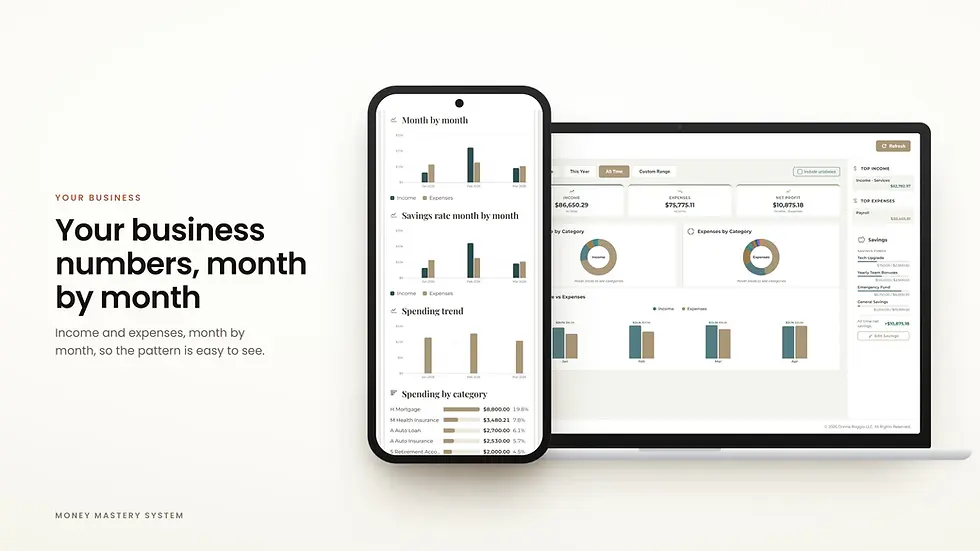
A steady base makes the monthly line flatter. Example data.
Where regulars go
They moved or their life changed. Nothing to fix, and worth knowing how many.
They were never asked to rebook. The most common reason, and the easiest to change.
The price rose without a word. People accept a rise far more readily when they are told first.
Something went wrong once and nobody followed up.
They drifted. A longer gap than usual became a habit.
Five habits that hold the number
Rebook before she leaves. A next appointment already in the diary is the simplest way to make sure she comes back.
Keep a list of anyone overdue. If she usually comes every six weeks and it has been ten, send a note.
Tell regulars about a price change in person, a month ahead.
Follow up after anything that went less than well.
Thank the long-standing ones. It costs nothing and it is noticed.
What is a good retention rate?
It depends on what you do. Someone seen every six weeks for years will have a higher figure than someone hired for a single project. The useful comparison is your own rate six months ago, and whether you know the reason for the change.
Three mistakes
Counting everyone who ever booked. One-time clients are a different question. Measure regulars.
Looking only at income. New clients can replace lost income for a while and hide a falling rate.
Waiting for a quiet month to notice. By then the pattern is a year old.
If your regulars are the base of the business, they also set your break-even. Our post on the break-even point for a service business shows how many sessions a month the business needs before it supports you.
Start with the whole picture, free
La Soglia, the free membership of the Money Mastery System, holds everything you own and owe in one place, personal and business together, with no bank connection and no card. Income sorted by source, which is where the list of regulars comes from, is part of the paid membership.
Bring it to the Collective
How do you ask a client to rebook without it feeling like a pitch? The Money Mastery Collective has a discussion feed open on the free membership. Swap wording there.
Questions we hear
How do I calculate client retention rate?
Divide the regular clients still booking at the end of a period by the regulars you had at the start, and multiply by 100.
What is a good client retention rate?
It varies by type of service. Compare your own rate with six months ago and look for the reason behind any change.
How much is a regular client worth?
Her price per visit times her visits in a year. At $95 and nine visits, that is $855 a year.
Why do clients stop coming?
Often nobody asked them to rebook. Other reasons include an unannounced price rise, a poor experience that was not followed up, or a change in their own life.
References
There are no outside figures in this post. Every number is our own worked example.
Start free with La Soglia
La Soglia is the free membership of the Money Mastery System. It gives you the Net Worth Tracker, where everything you own and everything you owe sits in one place, and the Money Mastery Collective. There is no card to enter and no bank connection.
Keep in touch
Donna shares a short version of posts like this one on Instagram and LinkedIn. Follow along there, or find everything in one place on our links page.
A note on what this is
This article is educational. The Money Mastery System is an educational tool, not financial software, and nothing here is legal, tax, investment or financial advice. The figures are illustrations, and your own prices, visit frequency and client base will differ. For guidance on your own circumstances, please speak with a qualified professional who knows them.


Comments