


Updated: Sep 17

Let me start by taking something off your shoulders. Business debt is not a moral failing. It does not mean you are bad with money or that you built the wrong business. Debt is a tool, and like any tool it can be used well or poorly, but carrying it does not make you a failure. So many women carry a quiet shame about debt that makes them either avoid looking at it entirely or attack it so aggressively that they starve the very business that is supposed to pay it off. Neither extreme works. What works is a plan.
Here is the mistake the panic approach makes. When debt feels frightening, the instinct is to throw every spare dollar at it, skipping your own pay, draining your cushion, cutting the things that actually generate income. That can feel virtuous, but it often weakens your business right when it needs to be strong, and a weak business struggles to pay off anything. Learning how to pay off business debt strategically means shrinking what you owe steadily while keeping your business healthy enough to keep earning. Let me walk you through it.
Step 1: Get the Full Picture Out of the Shadows
The first step is the one avoidance makes hardest: look at all of it, clearly, without flinching. You cannot make a plan for a number you refuse to see. Debt kept vague and scary in the back of your mind always feels worse than debt written plainly on a page.
List every debt: who you owe, the total balance, the interest rate, and the minimum payment. Line them up side by side. This single act often brings enormous relief, because the monster in the dark turns out to be a set of specific, manageable numbers. And it gives you the information the whole plan depends on, especially those interest rates, which tell you where your debt is quietly growing fastest. If you'd like a clean template to lay it all out, the free Money Mastery Net Worth Tracker gives you a simple structure to capture every debt in one place.
Step 2: Protect the Business First, Then Attack the Debt
This is the step that separates a strategic payoff from a panicked one. Before you send extra money to debt, make sure your business can keep running and earning. That means you still pay yourself something, you still cover your essential costs, and you still set aside your taxes. A business that stops paying its owner or skips its taxes to kill debt faster usually just creates a new emergency.
Decide on a sustainable amount you can put toward debt beyond the minimums, an amount that shrinks what you owe meaningfully without hollowing out your business. Slower and steady beats fast and fragile every time, because the goal is not to be debt-free next month at the cost of your business, it is to be debt-free while still standing strong.
Step 3: Choose Your Payoff Order Deliberately
Once you have your extra payoff amount, you need to decide where it goes first, because spreading it thinly across everything is the slowest path. There are two proven approaches, and both work, so choose the one that fits how you are wired.
The first is to target the highest interest rate debt first while paying minimums on the rest, which saves you the most money over time because it stops the fastest-growing debt from growing. The second is to target the smallest balance first, regardless of rate, which gives you a quick, motivating win and builds momentum. Whichever you choose, put all your extra money on that one debt until it is gone, then roll everything you were paying on it onto the next. This rolling focus is what makes debt fall far faster than scattered payments ever could.
Step 4: Stop the Debt From Growing Back
There is little point in paying off debt if new debt quietly takes its place, so part of any real plan is addressing why the debt appeared. Sometimes it was a deliberate, healthy investment in growth, and that is fine. But sometimes it is a sign of a gap, expenses outrunning income, no cushion for surprises, prices set too low to actually pay the business.
While you pay down what you owe, look honestly at the cause. If your prices do not cover your true costs, debt will keep filling the gap no matter how fast you pay. If a lack of any buffer means every surprise goes on a card, building even a small reserve alongside your payoff prevents the next round. Paying off debt and fixing its source at the same time is how you get free and stay free.
How to Pay Off Business Debt Strategically: A Real Example
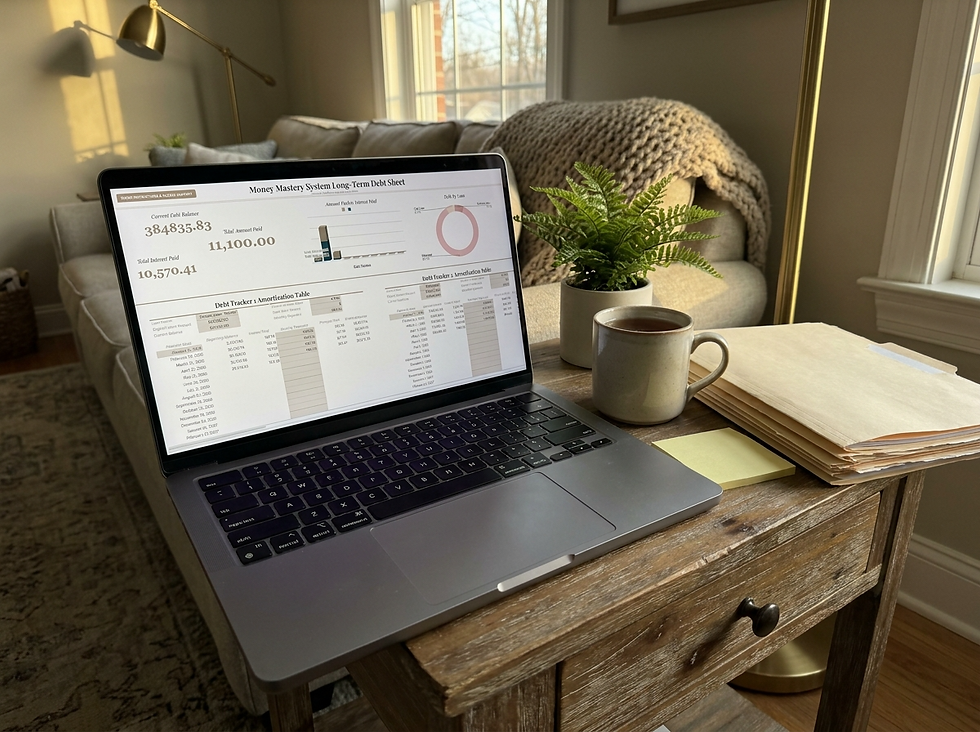
Let me put this into numbers so the plan feels real.
Say you have three business debts: a $1,000 balance at 22 percent interest, a $3,000 balance at 12 percent, and a $500 balance at 8 percent. In a panic, you might drain your cushion and skip your own pay to throw $2,000 at them this month, leaving your business gasping. Instead, you make a plan. After paying yourself a modest amount, covering essentials, and setting aside taxes, you find you can sustainably put $400 a month toward debt beyond the minimums.
You choose the highest-interest-first approach, so all $400 extra goes to the $1,000 debt at 22 percent while you pay minimums on the others. In about three months, that debt is gone, and it was the one growing fastest. Now you roll that entire $400, plus the minimum you were already paying on it, onto the $3,000 debt. Because you are now hitting it with a larger combined payment, it falls much faster than it would have. Then you roll everything onto the last debt and finish it off. Throughout, your business kept running, you kept getting paid, and your taxes stayed covered. You got free without going fragile, and that is the whole point.
A plan like this is far easier to stick to with support and encouragement, which is exactly what the Money Mastery community offers. If you would like help building a payoff plan that fits your real numbers, you can schedule a call with a coach who has 20 years of business coaching experience and map it out together.

To see how your debt fits into your whole financial picture as it shrinks, the free Money Mastery net worth tool shows you the full view, and watching your debt drop against your growing assets is one of the most motivating things you will do.
Debt handled in a panic can quietly wound your business. Debt handled with a plan becomes just another number you steadily shrink while your business keeps growing right alongside. You are not behind, and you are not stuck. You simply need a clear plan and a little support, and both are within reach. If you want help finding where to start, the upcoming Money Clarity Assessment can show you your smartest first move.
About Donna Roggio
Donna Roggio is the founder of the Money Mastery system and has spent 20 years helping women build real financial clarity and confidence in their businesses. She created Money Mastery to give women a supportive community and a simple, learnable way to understand their money, without shame, jargon, or overwhelm. Donna believes every woman can learn to run her numbers with confidence, and she is here to help you do exactly that.
Frequently Asked Questions
How do I pay off business debt strategically?
Start by listing every debt with its balance, interest rate, and minimum payment. Protect your business first by still paying yourself, covering essentials, and setting aside taxes. Then put a sustainable extra amount toward one debt at a time, and address the reason the debt appeared so it does not grow back.
Should I pay off my highest interest debt or smallest balance first?
Both work. Highest interest first saves you the most money over time. Smallest balance first gives you a quick, motivating win. Choose the one that best matches how you stay motivated, and put all your extra payment on that one debt until it is gone.
Should I stop paying myself to pay off business debt faster?
Generally no. Starving your business or skipping your own pay to kill debt quickly often creates a new emergency. A steady, sustainable payoff that keeps your business healthy usually works better than an aggressive one that weakens it.
How do I stop business debt from coming back?
Address the cause while you pay it down. If prices are too low to cover your true costs, or a lack of any buffer sends every surprise onto a card, fixing those gaps prevents the next round of debt. The free Money Mastery Net Worth Tracker helps you find and close those gaps.


