


What a 5%, 10% and 15% Price Rise Does to What You Actually Keep
A 10% price rise does not give you 10% more. It gives you 12.5% more, because your costs stay where they were and the whole of the increase lands on the part you keep.
This is the most encouraging piece of arithmetic in a small business, and almost nobody is shown it. People think about a price rise in terms of what the client pays. The interesting figure is what it does to you.
Here is the table for three sizes of rise, why the effect is larger than the percentage, and how many clients you could lose before you were worse off.

Income moves, costs stay put, and the gap between them widens. Example data.
The short version
A price rise goes almost entirely to what you keep, because most costs do not rise with it.
On the figures here, 5% more on the price is 6.25% more kept, and 10% is 12.5%.
You can lose some clients and still come out ahead, with less work.
The same arithmetic runs in reverse for a discount.
The starting point
Line | A year |
|---|---|
Income from clients | $90,000 |
Cost of running the business | $18,000 |
Profit | $72,000 |
Tax set aside, at 25% | $18,000 |
What she keeps | $54,000 |
The 25% is an example. What matters for this post is that the $18,000 of costs is the same whatever she charges. Her rent, software and insurance do not know her prices went up.
Three sizes of rise
Price rise | Income | Costs | Kept after tax | More than before |
|---|---|---|---|---|
None | $90,000 | $18,000 | $54,000 | |
5% | $94,500 | $18,000 | $57,375 | 6.25% |
10% | $99,000 | $18,000 | $60,750 | 12.5% |
15% | $103,500 | $18,000 | $64,125 | 18.75% |
A 10% rise adds $9,000 of income and $6,750 to what she keeps. Measured against the $54,000 she kept before, that is 12.5% more for the same hours and the same clients.
Why it is more than the percentage
Because the rise is applied to all of her income and compared with only the part she keeps. Her income is $90,000 and what she keeps is $54,000. Ten percent of the larger figure is a bigger share of the smaller one.
The higher your costs are as a share of income, the stronger this effect. A business that keeps only a third of what it bills sees an even larger lift from the same rise. That is why a price change matters most to exactly the businesses that feel they cannot afford one.
How many clients could you lose?
Suppose she has 100 regular clients paying $900 a year each. To be cautious, this table lets her costs move with her income, at 20% of whatever she takes in, which is harsher than the fixed costs above. After a 10% rise each client pays $990.
Clients who stay | Income | Left after costs | Compared with before |
|---|---|---|---|
100, before the rise | $90,000 | $72,000 | |
100 | $99,000 | $79,200 | $7,200 ahead |
95 | $94,050 | $75,240 | $3,240 ahead |
91 | $90,090 | $72,072 | About even |
90 | $89,100 | $71,280 | $720 behind |
She can lose nine clients in a hundred and be in the same position as before, with nine fewer people to look after. If five leave, she is $3,240 ahead and has more room in her week.
In practice far fewer than nine in a hundred usually leave over a rise of this size, and we will not put a number on that because it depends entirely on the business. The table simply shows how much room there is.
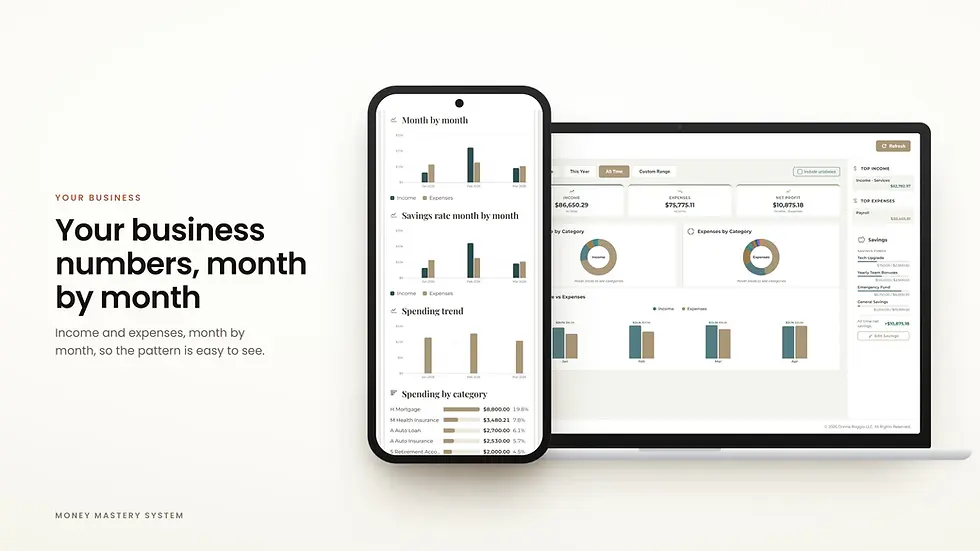
The month the new price starts is easy to see afterwards. Example data.
The same sum in reverse
Discount | Income | Costs | Kept after tax | Less than before |
|---|---|---|---|---|
None | $90,000 | $18,000 | $54,000 | |
10% off | $81,000 | $18,000 | $47,250 | 12.5% |
20% off | $72,000 | $18,000 | $40,500 | 25% |
A 20% discount across the board takes a quarter of what she keeps. This is the arithmetic behind every piece of advice to be careful with discounts, and it is the mirror image of the table above.
What to do with this
Find your own three numbers: income, costs and what you keep.
Run the table for 5% and 10%. It takes five minutes.
Work out how many clients you could lose before you were worse off.
Choose the rise, and tell clients plainly. Our post on raising prices without losing your best clients covers how to keep the ones who matter most.
Three cautions
Costs are not perfectly fixed. Card fees rise with income, and supplies rise with volume. The effect is still large.
Tax takes its share of the increase. The table already allows for that.
A rise is not a substitute for knowing your numbers. It works best when the new price comes from what the work costs you to deliver.
See it land, free
La Soglia, the free membership of the Money Mastery System, holds everything you own and everything you owe in one place, personal and business together, with no bank connection and no card. The income and cost totals behind this table come from the paid membership, which sorts your transactions for you.
Bring it to the Collective
When did you last raise your prices, and by how much? The Money Mastery Collective has a discussion feed open on the free membership, and it is a number most owners are relieved to say out loud.
Questions we hear
How much more will I earn if I raise my prices 10%?
If your costs stay the same, more than 10%. In the example a 10% rise increases what the owner keeps by 12.5%.
Why does a price increase raise profit by more than the percentage?
Because the rise applies to all your income while your costs stay the same, so the whole increase goes to the part you keep.
How many clients can I lose after a price increase?
It depends on your costs. In the example, with a 10% rise, about nine clients in a hundred could leave before the owner was worse off.
How much does a discount cost me?
More than the percentage. In the example a 20% discount reduces what the owner keeps by 25%.
References
There are no outside figures in this post. Every number is our own worked example.
Start free with La Soglia
La Soglia is the free membership of the Money Mastery System. It gives you the Net Worth Tracker, where everything you own and everything you owe sits in one place, and the Money Mastery Collective. There is no card to enter and no bank connection.
Keep in touch
Donna shares a short version of posts like this one on Instagram and LinkedIn. Follow along there, or find everything in one place on our links page.
A note on what this is
This article is educational. The Money Mastery System is an educational tool, not financial software, and nothing here is legal, tax, investment or financial advice. The figures are illustrations, and your own costs, tax position and client base will differ. For guidance on your own circumstances, please speak with a qualified professional who knows them.



Comments