


How to Tell If Your Business Actually Had a Good Year
Revenue up 20%. Profit down 24%. That is one business, one year, and it is the most common shape of a year that felt good and was not.
$80,000 of revenue at a 22% margin keeps you $17,600. The following year, $96,000 at 14% keeps you $13,440. You worked more, you earned more, and you kept $4,160 less.
Revenue is the number everyone watches because it is the easiest one to see. It is also the only one on this page that cannot tell you whether the year worked.

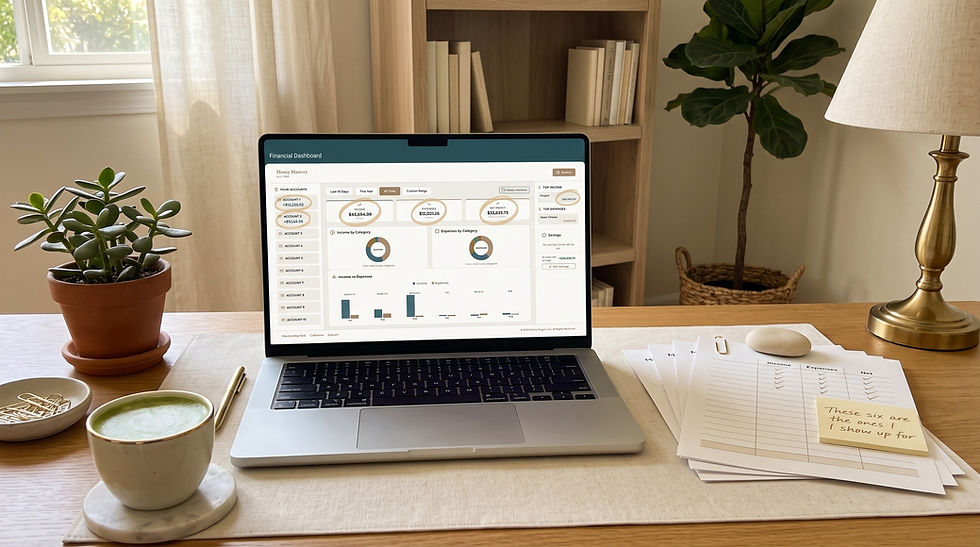
The Money Mastery System dashboard showing the year against the one before it. Example data.
The short version
Revenue alone cannot tell you whether the year worked.
Four checks can: margin, real hourly rate, client concentration, and what the balance is after tax.
Revenue up and margin down is the most common good-looking bad year.
A quieter year with a better margin can be the better year.
The four checks
What looked good | What to check instead | What it looks like when the year only looked good |
|---|---|---|
Revenue was up | Profit margin, this year against last | Revenue +20%, margin 22% to 14%, so $4,160 less kept |
You were busy all year | Your real hourly rate | Same take-home, 300 more hours worked |
You landed a big client | What share of revenue one client is | One client at 40% or more, which is not a client, it is a dependency |
The bank balance looked healthy | What of it is the tax set-aside | The balance is the tax money, and it is already spent |
Four checks, about twenty minutes, and any one of them can flip the verdict.
How to run them
Margin. Profit divided by revenue, this year and last. If revenue rose and margin fell, find out what grew faster than the income did.
Real hourly rate. Take-home divided by the hours you actually worked. Our post on your true hourly rate has the grid.
Concentration. Your biggest client's revenue as a share of the total. Above 30% is worth a plan. Above 50% is the plan.
Set-aside. Subtract what you owe in tax from the balance. What is left is what you actually have.
The year that was good and did not feel it
It goes the other way too, and less is written about it.
A quieter year with a better margin, fewer clients and a proper set-aside is a better year than a loud one that kept less. It rarely feels like it in December, because busy feels like progress and calm feels like risk.
The four checks are the only way to tell those two apart, and neither of them announces itself.

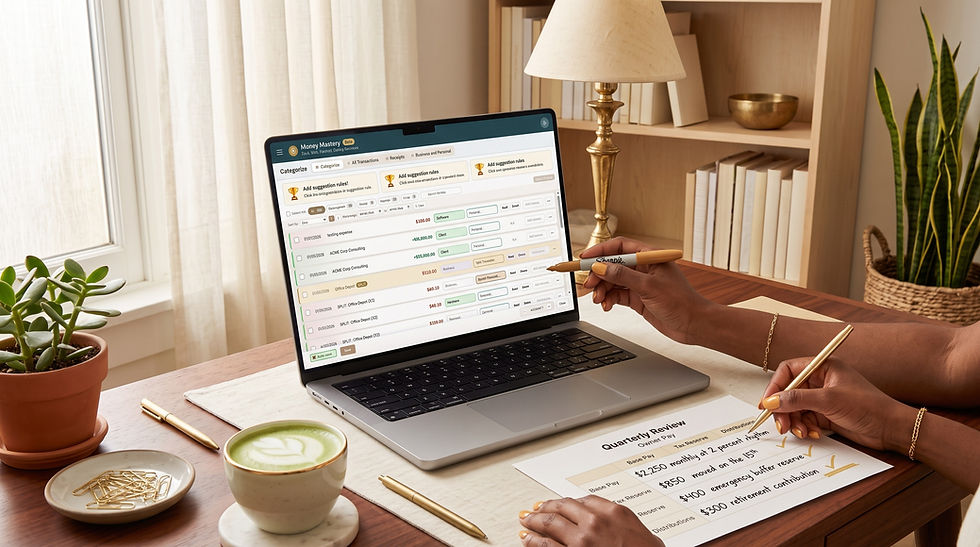
The Profit and Loss screen with this year beside last. Example data.
The margin check, worked through
Margin is profit divided by revenue. In the example at the top, $17,600 divided by $80,000 is 22%, and $13,440 divided by $96,000 is 14%.
The useful question is what the eight points went on. Revenue rose by $16,000. Costs rose by $20,160, from $62,400 to $82,560. So every extra dollar of income arrived with about $1.26 of extra cost attached.
That is the signature of growth bought with discounts, extra help or a bigger space, and it only shows when the two years sit side by side.
What to do with the verdict
If the year passed all four checks, the job is to protect what worked. Write down what changed, and keep it.
If it failed one, that one is next year's single priority, and one is enough. If margin fell, find the cost that grew fastest and price for it. If your real rate fell, reprice or drop the lowest-paying work. If one client is too large a share, win two mid-sized clients before chasing another big one. If the balance is mostly tax, open a set-aside account and move the money the day it lands.
One fix chosen from the numbers beats five resolutions made in January.
Run the four on your own numbers, free
All four come from figures you already have, which is not the same as figures you can reach. La Soglia, the free membership of the Money Mastery System, holds what you own and what you owe in one place, personal and business together, no bank connection and no card. The paid membership is what sorts a year of transactions into the margin figure without you doing it by hand.
Bring it to the Collective
The concentration check is the one people most want a second opinion on. The Money Mastery Collective has a discussion feed open on the free membership.
Questions we hear
What is a good margin?
It varies so much by trade that a single number would mislead you. What matters is your own, this year against last.
What if I do not know my hours?
Track one ordinary week. It is the most useful week of admin you will do all year.
Is one big client always bad?
No. It is only bad unexamined. Know the share, and know what one month without them looks like.
How do I compare years if I only started this year?
Compare halves. The first six months against the second six tells you the direction, which is what the checks are for.
Which check matters most?
Margin, because the other three often explain it. Start there, and use the rest to find out why it moved.
Start free with La Soglia
La Soglia is the free membership of the Money Mastery System. It gives you the Net Worth Tracker, where everything you own and everything you owe sits in one place, and the Money Mastery Collective. There is no card to enter and no bank connection.
Keep in touch
Donna shares a short version of posts like this one on Instagram and LinkedIn. Follow along there, or find everything in one place on our links page.
A note on what this is
This article is educational. The Money Mastery System is an educational tool, not financial software, and nothing here is legal, tax, investment or financial advice. The figures are worked examples, not a statement about your business. For guidance on your own circumstances, please speak with a qualified professional who knows them.

Comments