Updated: Sep 17
I want to ask you a question, and I want you to answer it honestly. When your paycheck hits your account, do you know exactly where every dollar is going before you spend it?
If you hesitated, you are in the majority. According to a 2026 WalletHub survey, 84% of Americans say they stick to a budget, but when you dig into the details, the picture gets blurry fast. Eighty-three percent of those budgeters say increasing costs make it hard to stick to their plan, and 57% say unexpected expenses throw them off entirely. Having a budget and having a budget that actually works are two very different things.
That gap between "I have a budget" and "I know where every dollar goes" is exactly what zero-based budgeting was designed to close.
Zero-based budgeting is the method I come back to again and again when I talk to business owners, freelancers, and anyone who wants to stop wondering where their money went and start telling it where to go. It is not the only budgeting method out there, and it is not the right fit for every single person. But it is the most intentional method I have ever used, and understanding how it works will make you a better money manager regardless of which approach you choose.
In this post, I am going to walk you through exactly what zero-based budgeting is, where it came from, how to set one up step by step, who it works best for, and how it stacks up against other popular methods. Consider this your complete guide.

What Is Zero-Based Budgeting and How Does It Work?
Zero-based budgeting is a method where your income minus your expenses equals zero. Every single dollar you earn gets assigned a specific job before the month starts. That job might be paying rent, buying groceries, going toward your emergency fund, paying down debt, or sitting in a savings account. The point is that no dollar is left unassigned. No dollar is floating around your checking account without a purpose.
Now, this does not mean you drain your bank account to $0 every month. It means every dollar is accounted for. There is a big difference between having zero dollars and having zero dollars that are not spoken for.
The concept is not new. Peter Pyhrr, a manager at Texas Instruments, developed zero-based budgeting in the late 1960s as a corporate accounting strategy. The idea was that instead of starting each budget cycle by adjusting last year's numbers up or down, you would start from zero and justify every single expense from scratch. Former President Jimmy Carter tried to bring it to the federal government in the 1970s, and while it did not stick in Washington (no surprise there), the principle found its way into personal finance.
Today, zero-based budgeting is one of the most widely recommended personal finance strategies. Ramsey Solutions calls it the best budgeting method, and their EveryDollar app, built specifically around zero-based budgeting, reports that new users identify an average of $3,015 in financial margin during onboarding. Fidelity, Investopedia, and NerdWallet all feature it as a core method in their budgeting education.
The formula is beautifully simple:
Monthly Income - Monthly Expenses = $0
That is it. That is the entire system in one equation.

Why Zero-Based Budgeting Works Better Than Most Methods
I am going to be straightforward about why I think this method deserves your attention, even if you end up choosing a different approach.
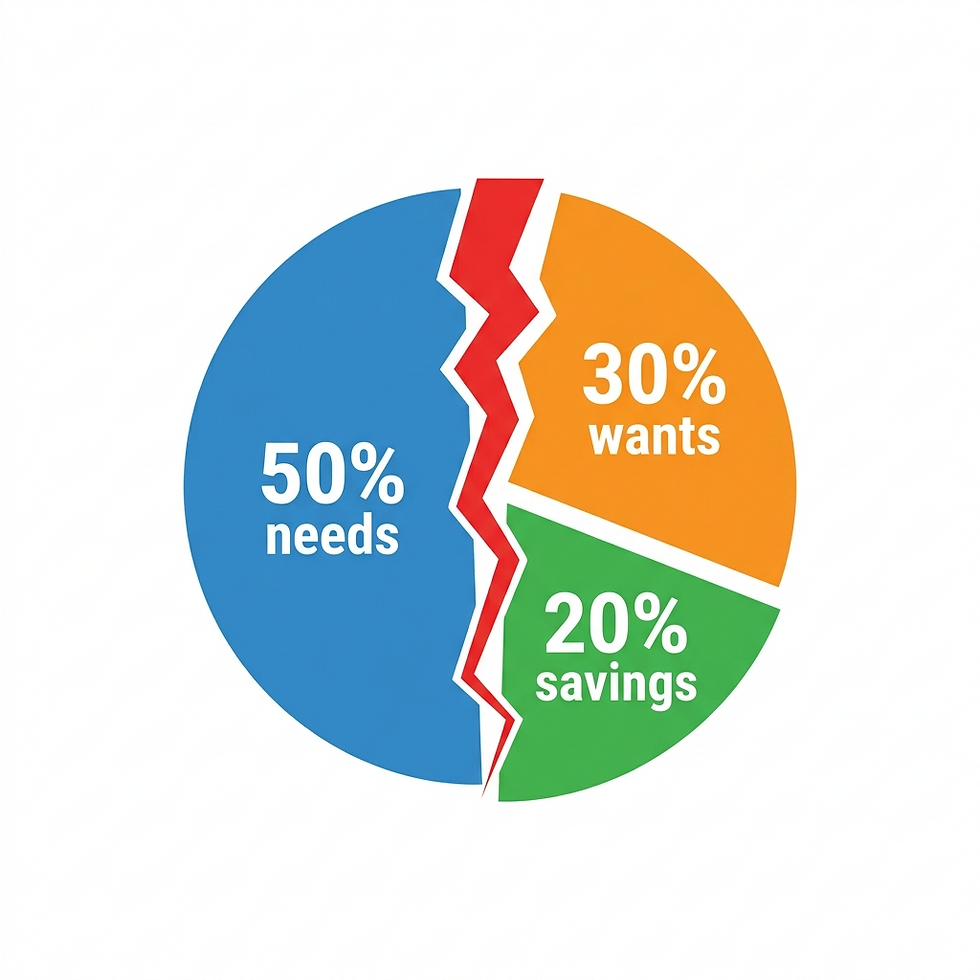
Most budgeting methods tell you to follow a formula. Spend 50% on needs, 30% on wants, 20% on savings. Or save 20% and spend the rest however you like. These approaches are fine as starting points, and we explored their strengths and limitations in our post on whether the 50/30/20 rule works for self-employed earners. But they all share a fundamental weakness: they leave large chunks of your money without a specific assignment.
When $1,500 of your paycheck sits in a bucket labeled "wants" with no further instructions, that money tends to evaporate. You spend it without thinking because the budget told you it was okay to spend it. There is no friction. No intentionality. No moment where you ask, "Is this the best use of this dollar right now?"
Zero-based budgeting eliminates that vagueness. Instead of putting $1,500 into a "wants" bucket, you would assign $200 to dining out, $100 to entertainment, $75 to clothing, $50 to personal care, and $1,075 to a specific savings or debt goal. Every dollar has a name tag. Every dollar has a destination.
Here is why that matters, backed by data.
Intuit's consumer survey found that 41% of respondents say creating a budget and sticking to it has had the biggest impact on improving their relationship with money. Another 92% of Americans say they feel better about themselves when they stick to a budget. The problem is not that people do not want to budget. The problem is that most budgeting methods do not give them enough structure to actually follow through.
Zero-based budgeting provides that structure. And for people who feel like their money disappears every month despite their best intentions, that structure can be the difference between financial stress and financial confidence.
How to Create a Zero-Based Budget Step by Step
Let me walk you through the exact process. You can do this with pen and paper, a Google Sheets spreadsheet, or an app like Money Mastery or EveryDollar. The tool matters less than the process.
Step 1: Calculate Your Total Monthly Income
Write down every source of income you expect this month. Paychecks, freelance payments, side hustle earnings, any recurring deposits. Add them all up. That total is the number you are working with.
If your income varies month to month (and if you are self-employed, the Federal Reserve reports that 58% of you experience this), use your lowest recent month as your income number. Budget based on the floor, not the ceiling. If you earn more than expected, you can assign those extra dollars when they arrive. We covered this approach in depth in our post on how to budget with irregular income.
Step 2: List Every Single Expense for the Month
This is where the magic happens and where most people resist. You need to list everything. Not just the big bills. Everything.
Start with your essentials: housing, utilities, groceries, transportation, insurance, minimum debt payments. Then move to your financial priorities: savings contributions, emergency fund deposits, extra debt payments, tax set-asides if you are self-employed.
Then list your discretionary spending: dining out, entertainment, subscriptions, clothing, personal care, gifts, hobbies. Do not skip the small stuff. That $14.99 streaming service, that $5.99 cloud storage, that $12 monthly app renewal. These are the spending leaks that bleed your budget if they do not have a line item.
Finally, add a miscellaneous category. Every month has surprises. A coworker's birthday gift. A parking ticket. A replacement phone charger. Giving yourself a $50 to $100 miscellaneous buffer means these small surprises do not derail your entire plan.

Step 3: Subtract Expenses From Income Until You Reach Zero
This is the moment of truth. Take your total income from Step 1 and subtract every expense from Step 2.
If you end up with money left over, do not leave it floating. Assign it. Put it toward your current financial goal, whether that is building your emergency fund, paying off a credit card, or saving for a business investment.
If your expenses exceed your income, you need to make cuts. Start with the discretionary categories. Can you trim dining out by $50? Can you pause a subscription you are not using? (Our post on how to decide whether to cancel or keep a subscription has a framework for exactly this decision.) If cutting is not enough, look at ways to increase your income for the month.
The goal is simple: income minus expenses equals zero. Every dollar accounted for. No orphan dollars.
Step 4: Track Every Transaction Throughout the Month
This is where zero-based budgeting separates itself from every "set it and forget it" approach. You built the plan. Now you need to follow it.
Every time you spend money, log it against the right category. Every time income arrives, record it. If you overspend in one category, you do not just ignore it. You move money from another category to cover the difference. If you spent $60 more on groceries than planned, pull $60 from your clothing or entertainment line. The total still equals zero.
This is exactly what Money Mastery's financial dashboard is built for. When your transactions stream in automatically and get categorized, tracking takes seconds instead of minutes. You can see at a glance which categories are on track and which ones need attention. The dashboard becomes your zero-based budget's best friend.
Step 5: Build a Brand New Budget Before the Next Month Starts
This step is critical and it is the one most people skip. Your February budget should not look identical to your January budget. Every month has different expenses. March might have a car insurance payment. April might have a birthday trip. December will look nothing like July.
Before the new month begins, sit down and build a fresh zero-based budget. Adjust the categories and amounts to match what is actually coming. Use last month's tracking data to make smarter estimates. This monthly reset is what keeps zero-based budgeting aligned with your real life instead of a theoretical version of it.

A Real-World Zero-Based Budget Example
Here is what a zero-based budget looks like in practice for a small business owner bringing home $4,500 after taxes in a given month.
Income: Freelance payments $3,200 + Side project $800 + Recurring client retainer $500 = $4,500
Expenses: Rent $1,200, Utilities $180, Groceries $500, Transportation $200, Insurance $150, Phone and internet $120, Business software subscriptions $85, Tax savings (25%) $375, Emergency fund contribution $200, Extra debt payment $300, Dining out $150, Entertainment $75, Clothing $50, Personal care $40, Gifts $25, Miscellaneous $100, Long-term savings goal $250 = $4,500
Income ($4,500) - Expenses ($4,500) = $0
Every dollar has a job. The tax money is set aside before it can get spent. The emergency fund grows every month. Debt gets attacked with purpose. And there is still room for dining out, entertainment, and personal spending. Zero-based budgeting does not mean zero fun. It means zero waste.
How Zero-Based Budgeting Compares to Other Popular Methods

I want to give you an honest, side-by-side comparison so you can see where zero-based budgeting fits in the landscape of budgeting strategies. None of these methods are inherently bad. They just solve different problems at different levels of detail.
Zero-Based Budgeting vs. the 50/30/20 Rule
The 50/30/20 rule splits your after-tax income into three buckets: 50% needs, 30% wants, 20% savings. It is simple and easy to remember. But it does not tell you what to do within those buckets. You know 30% goes to "wants," but which wants? How much for dining versus entertainment versus subscriptions? The money inside those buckets is unassigned, and unassigned money gets spent impulsively.
Zero-based budgeting goes deeper. Every dollar within every category has a specific assignment. It takes more time, but it gives you more control.
The 50/30/20 rule also struggles with variable income. If you earn $3,000 one month and $7,000 the next, the percentages produce wildly different dollar amounts for your essentials. Zero-based budgeting adapts to the actual number you have this month.
Zero-Based Budgeting vs. the Envelope Method
The envelope method puts cash into labeled envelopes for each spending category. When the cash is gone, you stop spending. It is a powerful tool for controlling discretionary spending, and it actually works beautifully as a tactic inside a zero-based budget.
The difference is scope. The envelope method focuses on controlling spending in a few categories. Zero-based budgeting is a comprehensive system that accounts for every dollar, including savings, debt payments, and long-term goals. You can use envelopes to execute parts of your zero-based budget, especially for categories like groceries and dining where physical spending limits help.
Zero-Based Budgeting vs. Pay-Yourself-First (Reverse Budgeting)
Pay-yourself-first budgeting prioritizes savings by moving a set amount into savings before covering any expenses. The rest is yours to spend however you want.
This method is great for building a savings habit, and it is better than no budget at all. But it gives you zero visibility into where the remaining money goes. If you are in debt, need to manage business expenses, or want to understand your spending patterns, pay-yourself-first does not provide enough detail.
Zero-based budgeting includes the pay-yourself-first principle (you assign savings as a line item), but it goes further by assigning every remaining dollar too.
Zero-Based Budgeting vs. the Priority Percentage Method
In our post on the 50/30/20 rule for the self-employed, we introduced the Priority Percentage Method: a layered approach where money flows through taxes, operating costs, owner's pay, emergency fund, and savings in order of priority.
This method and zero-based budgeting are actually highly compatible. The Priority Percentage Method gives you the order of operations (what to fund first). Zero-based budgeting gives you the precision (exactly how much goes where). Used together, they create a system that is both strategically sound and granularly accountable.
Who Is Zero-Based Budgeting Best For?
Zero-based budgeting works for nearly anyone willing to invest the time, but it is especially powerful for certain situations.
If you have never budgeted before and want a clear framework, zero-based budgeting gives you step-by-step structure instead of vague guidelines. You do not have to guess. You follow the equation.
If you are paying off debt, this method forces you to find every available dollar and point it at your debt. There are no "leftover" dollars sitting idle. Every surplus goes to work.
If you have irregular income as a freelancer, contractor, or small business owner, zero-based budgeting adapts naturally. You budget based on what you actually have this month, not what you hope to earn. If you have already read our post on budgeting with irregular income, the zero-based method is the next level of that approach.
If you are a couple managing money together, zero-based budgeting creates a shared plan that both partners agree on before the month starts. Every dollar's job is discussed and decided together, which reduces financial friction.
If you earn a good income but still feel like your money disappears, this method reveals exactly where it goes. Ramsey Solutions puts it perfectly: "Making more money does not fix a spending problem. But zero-based budgeting does."
The Honest Downsides of Zero-Based Budgeting
I would not be doing you any favors if I only talked about the positives. Zero-based budgeting has real drawbacks, and I want you to go in with your eyes open.
It takes more time than other methods. Building a new budget every month and tracking every transaction requires effort. Ramsey Solutions acknowledges that most people need about three months to get comfortable with the process. The first month feels clunky. The second is smoother. By month three, it becomes routine and takes about 15 to 20 minutes.
It can feel restrictive at first. If you have never told your money where to go, it can feel like you are losing freedom. But what you are actually gaining is the freedom to spend without guilt because you already know the money is accounted for.
It requires discipline to maintain. Unlike percentage-based methods where you "set it and sort of forget it," zero-based budgeting asks you to stay engaged all month. If you stop tracking, the system breaks down. This is where tools matter. A dashboard that auto-categorizes your transactions (like Money Mastery) makes the discipline piece dramatically easier.
And it does not automatically make you smarter about categories. If you assign $500 to dining out without questioning whether that amount serves your goals, zero-based budgeting will faithfully let you spend $500 on dining out. The method gives you control, but you still have to exercise judgment about what you are funding and why.
How Money Mastery Supports Zero-Based Budgeting
I built Money Mastery's reports and dashboard with exactly this kind of intentional budgeting in mind. Here is how the tool supports a zero-based approach.
The dashboard shows your income and expenses in real time, so you can see at a glance whether your spending is tracking against your plan. If you assigned $500 to groceries and you are at $420 by the 25th, you know you have $80 left. If you are at $580, you know you need to adjust another category.
The reports let you drill into any category and see every transaction. This is essential for zero-based budgeting because the method only works when you know exactly where money went, not just how much went out. Money Mastery's reports are designed to help you have a conversation with your money, not just stare at numbers.
The month-over-month comparison shows you how your spending evolves over time. This makes building next month's zero-based budget faster because you can see what actually happened last month instead of guessing.
And the flagging system lets you mark transactions for review, attach receipts, and note items you want to investigate. All of this feeds into the intentionality that makes zero-based budgeting so effective.
Your Action Step This Week
Here is what I want you to do before next Sunday. Pull up your bank statement from last month. Write down your total income at the top. Then list every single expense, grouped by category. Subtract expenses from income and see where you land.
If there is money left over, ask yourself: where did that money actually go? Because if you cannot answer that question, those dollars were spent without a plan. And that is exactly the problem zero-based budgeting solves.
Then, before this new month ends, build your first zero-based budget for next month. Every dollar. Every category. Income minus expenses equals zero.
If you want help getting started, grab our free Net Worth Tracker. It puts your personal and business accounts side by side across sixty account types and twelve tabs, and it stays yours.
Your money works hard for you. It is time to give every dollar a clear set of instructions.
Frequently Asked Questions About Zero-Based Budgeting
Does zero-based budgeting mean my bank account goes to zero?
No. It means every dollar of your income is assigned to a category, not that you spend everything. Your bank account should always have money in it. Keeping a buffer of $100 to $300 in your checking account is smart. The "zero" in zero-based budgeting refers to the number of unassigned dollars, not the number of dollars in your account.
Can I use zero-based budgeting with irregular income?
Absolutely. This is actually one of the best methods for variable income because you budget based on the money you actually have, not a theoretical average. Use your lowest recent month as your income number, list your expenses in priority order, and assign dollars to each category until the total equals zero. If more income arrives later in the month, build a mini-budget for those extra dollars.
How is zero-based budgeting different from the envelope method?
The envelope method is a spending-control tactic where you put cash in labeled envelopes. Zero-based budgeting is a comprehensive system that accounts for every dollar of income, including savings, debt payments, and long-term goals. You can use the envelope method inside a zero-based budget to manage specific spending categories like groceries or entertainment.
How long does it take to get good at zero-based budgeting?
Ramsey Solutions says most people hit their stride by month three. The first month feels clunky and you will probably forget expenses or underestimate categories. The second month is smoother. By the third month, building your budget takes 15 to 20 minutes and tracking becomes second nature.
Is zero-based budgeting too time-consuming for busy business owners?
It does take more effort than percentage-based methods. But the time investment drops significantly after the first few months, and tools like Money Mastery automate the tracking piece. The real question is whether you can afford not to know where your money goes. When 82% of small business failures trace back to cash flow problems (SCORE), spending 20 minutes a month on a zero-based budget is some of the cheapest insurance you can buy.
Related Posts
The 50/30/20 Budget Rule: Does It Actually Work When You're Self-Employed? - Compare the percentage-based approach to zero-based budgeting and see which fits your financial reality.
How to Budget With Irregular Income - If your income varies month to month, this guide shows you how to set a baseline and build a budget that flexes with your reality.
How to Create a Simple Financial Dashboard for Your Small Business - Once your zero-based budget is built, a dashboard helps you track whether your money is actually going where you told it to go.
7 Spending Leaks That Are Quietly Draining Your Business - Zero-based budgeting is one of the fastest ways to catch spending leaks because every dollar has to justify its existence.
zero-based budgeting explained